
In the digital era, the term 'business ecosystem' is more than a buzzword; it's a pivotal concept for companies navigating the complexities of the modern economy. This article delves into the three levels of ecosystem thinking, essential for companies looking to thrive through digital transformation.
Understanding Business Ecosystems
In today's fast-paced digital economy, the concept of a 'business ecosystem' is not merely a theoretical construct, but a practical reality that drives competitive advantage and innovation. A business ecosystem refers to a network of interconnected entities – companies, individuals, and technologies – that co-evolve and co-create value within a shared market or domain.
Key Characteristics of Business Ecosystems
1. Interconnectedness
Business ecosystems thrive on the interconnectedness of various players, including suppliers, distributors, customers, competitors, and regulatory bodies. This complex web of relationships is fueled by the continuous exchange of information, resources, and value.
2. Dynamic Evolution
Unlike traditional market models, ecosystems are dynamic and evolve over time. They adapt to changing market conditions, technological advancements, and consumer behaviors, fostering an environment of continuous innovation.
3. Co-creation of Value
In an ecosystem, value is co-created through collaborative efforts. Each participant contributes to and benefits from the network, leading to collective growth that surpasses what any single entity could achieve alone.
4. Niche Players and Keystone Companies
Ecosystems often comprise a mix of niche players and larger, keystone companies. While keystone companies may anchor the ecosystem, smaller players often drive innovation and agility.
5. Focus on User Experience
Central to the ecosystem model is the emphasis on enhancing user experience. By integrating products, services, and technologies from various providers, ecosystems can offer comprehensive solutions that address diverse user needs.
Benefits of Business Ecosystems
Enhanced Innovation
The collaborative nature of ecosystems fosters innovation, as companies share insights, technologies, and best practices.
Greater Market Reach
Ecosystems enable companies to reach new markets and customer segments through partnerships and collaborations.
Increased Resilience
Diversified relationships within an ecosystem provide a buffer against market volatility, making companies more resilient.
Opportunities for Specialization
Companies can focus on their core competencies, leveraging the strengths of other ecosystem players to offer holistic solutions.
The Three Levels of Ecosystem Thinking
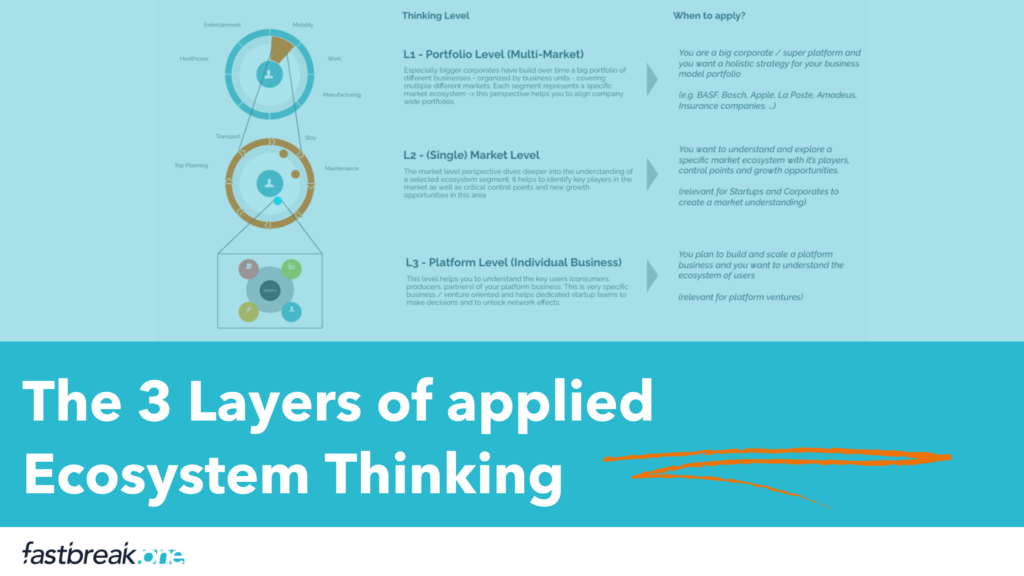
The Three Levels of Ecosystem Thinking provide a comprehensive framework for companies to effectively engage with and capitalize on their ecosystems. This framework moves from a broad, portfolio-level view down to specific market and platform-focused strategies.
Portfolio Level (Multi-Market)
At the portfolio level, large corporates and super platforms align their company-wide portfolios to maximize synergy and growth across diverse markets. This holistic approach is crucial for developing strategies that transcend individual business units, fostering a comprehensive vision that drives innovation and competitive advantage in multiple markets.
Market Level (Single Market)
The market level zooms in on a specific ecosystem segment. This approach is vital for understanding the nuances of a single market, including the identification of key players, control points, and untapped growth opportunities. Companies can leverage this level to develop targeted strategies that resonate with the unique dynamics of a particular market.
Platform Level (Individual Business)
At the platform level, the focus shifts to building and scaling individual platform businesses. This involves a deep understanding of the key users – consumers, producers, and partners – and the creation of strategies to unlock powerful network effects. This level is about creating value that attracts and retains users, thereby enabling rapid growth and sustainability.
Implementing Ecosystem Thinking in Business Strategy
The journey of implementing ecosystem thinking into a business strategy marks a critical leap towards achieving digital transformation and sustainable growth. This process is intricate, blending strategic foresight with actionable steps.
Identify Ecosystem Opportunities
Analyze the market to pinpoint areas where you can establish or enhance your presence within an ecosystem.
Align Goals with Business Objectives
Ensure that ecosystem strategy is integrated into the overall mission and vision of the business.
Build Collaborative Partnerships
Seek out and establish relationships with other entities within the ecosystem, aiming for mutual benefits.
Leverage Technology
Use cloud computing, AI, or blockchain to enhance connectivity, facilitate data sharing, and streamline operations.
Foster Continuous Innovation
Encourage experimentation and calculated risks to stay relevant and competitive in the ecosystem.
Monitor and Adapt
Be agile, ready to adapt strategies in response to changes to maintain position and relevance.
Conclusion
Implementing ecosystem thinking in business strategy is complex but immensely rewarding. It involves understanding the nuances of the ecosystem, strategically aligning with business goals, and committing to collaboration and innovation.
Ecosystem thinking is more than a strategy; it's a mindset shift essential for businesses in the interconnected landscape of the digital economy. By embracing the three levels of ecosystem thinking – portfolio, market, and platform – companies can position themselves strategically for long-term success and sustainable growth.